Association for Dental Education in Europe

Learning together to improve oral health and quality of life

You are here

Plenary Session 2: Evidence in oral health professions education

Thursday, 27th August 2026 - 09:00 to 10:30
Add to Calendar
Timezone: 

Budapest (UTC+1 winter / UTC+2 summer)

Duration: 

90 Minute

Venue: 

HALL A

Session type: 
Type 1: Organised, planned and delivered by the ADEE
Including ADEE awards
Session synopsis: 
Welcome to our second plenary session at ADEE 2026 Budapest where we focus on evidence. We are deligheted to welcome Prof Péter Hegyi who presents 'TRANSLATIONAL MEDICINE: FROM SCIENCE TO SOCIETY'. 

The foundation of translational medicine lies in the ability to translate scientific discoveries into real-world applications. This challenge is equally important in medicine and dentistry, where rapid advances in areas such as biomaterials, regenerative therapies, oral cancer prevention, digital dentistry, and artificial intelligence are transforming patient care. Despite continuous healthcare advancements, EUROSTAT data reveal that 1.7 million people die annually in Europe, with approximately 1.2 million of these deaths being preventable through better primary prevention, earlier diagnosis, and more effective implementation of evidence-based healthcare. A major barrier to achieving sustainable improvements remains the gap between research and everyday clinical practice, which is largely rooted in outdated educational models in medicine, dentistry, and biomedical sciences (1).

Academia Europaea has introduced a translational cycle model to facilitate the effective integration of scientific knowledge into healthcare (2). This model emphasizes the need for a balanced educational approach that promotes innovation while ensuring that future physicians and dentists are able to critically evaluate and rapidly implement new scientific evidence. However, current healthcare education still focuses predominantly on theoretical knowledge and clinical skills, providing relatively limited training in research methodology, evidence appraisal, and the translation of scientific discoveries into patient care. Likewise, traditional research training often lacks sufficient exposure to clinical problems, slowing the implementation of innovations into routine healthcare.

To address this challenge, we have developed a hybrid PhD/healthcare Translational Medicine programme that enables students to engage simultaneously in scientific research and clinical practice. Through a "learning by doing" and "retaining by teaching" approach, participants acquire essential competencies in critical appraisal, scientific communication, clinical research methodology, and interdisciplinary collaboration. These skills are particularly valuable in rapidly evolving fields such as dentistry, where clinicians are increasingly expected to integrate emerging technologies and evidence into daily practice. Our programme aims not only to produce high-quality researchers but also to educate clinician-scientists capable of accelerating the translation of scientific discoveries into better patient outcomes (3,4). At the Semmelweis University Faculty of Dentistry, the implementation of the Translational Medicine programme resulted in a doubling of the number of PhD students and scientific output within just 4.5 years. These results demonstrate that modernizing research education can strengthen not only individual careers but also the scientific competitiveness and international visibility of an entire faculty.

(1) Hegyi P, Erőss B, Izbéki F, Párniczky A, Szentesi A. Accelerating the translational medicine cycle: the Academia Europaea pilot. Nat Med. 2021 Aug;27(8):1317-1319. doi: 10.1038/s41591-021-01458-8. PMID: 34312557.
(2) Hegyi P, Petersen OH, Holgate S, Erőss B, Garami A, Szakács Z, Dobszai D, Balaskó M, Kemény L, Peng S, Monteiro J, Varró A, Lamont T, Laurence J, Gray Z, Pickles A, FitzGerald GA, Griffiths CEM, Jassem J, Rusakov DA, Verkhratsky A, Szentesi A. Academia Europaea Position Paper on Translational Medicine: The Cycle Model for Translating Scientific Results into Community Benefits. J Clin Med. 2020 May 19;9(5):1532. doi: 10.3390/jcm9051532. PMID: 32438747; PMCID: PMC7290380.
(3) Hegyi P, Varró A. Systems education can train the next generation of scientists and clinicians. Nat Med. 2024 Dec;30(12):3399-3400. doi: 10.1038/s41591-024-03315-w. PMID: 39420217.
(4) Hegyi P, Garami A; Academia Europaea Translational Medicine Working Group. Academia Europaea's guidelines for the visualization of clinical outcomes. Nat Med. 2025 Oct 14. doi: 10.1038/s41591-025-03992-1. PMID: 41087565.

This session also includes the Early Career Educator Awards and the Haleon Preventative Oral Health in Society Award
Programme: 
08:45 Auditorium opens
08:55 Delegates to be seated
09:00

Session opening by chairs Prof Upen Patel and Prof Dalia Meisha

  • Acknowledging our first-time attendees
  • Reflections on Day 1
  • Aspirations for the day
09:10 Five minutes for wellness
09:15 Prof Péter Hegyi “Translational Medicine: From Science to Society”
09:50 Delegate question-and-answer session
10:05 ADEE Excellence in Dental Education Award – Early Career
Presented by Prof Mohammed Al-Haroni
10:15 ADEE Haleon Dentistry in Society Award
Presented by Prof Mohammed Al-Haroni
10:20 Closing remarks
Chair: 

Upen Patel

Associate Clinical Professor & Honorary Consultant Restorative Dentistry
University of Birmingham, Dental Hospital, UK

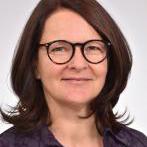
Dr Upen Patel was appointed as a full-time Clinical Lecturer in Restorative Dentistry at the University of Birmingham (UK) in 2008. He has since completed his PhD studies, appointed lead for eLearning, Assessment and is the Deputy Head of Undergraduate Education for the School of Dentistry. He is currently training to become a Consultant in Restorative Dentistry. Upen teaches undergraduate dental students in all five years of the BDS degree programme and delivers postgraduate training for dental-care-professionals. Upen is Chairperson for the UK & RoI Dental Schools Council Assessment in Dental Education Group, a member of the Executive Committee of the Association for Dental Education in Europe and a member of the Editorial Board for the European Journal of Dental Education. Upen has led many Special Interest Groups and initiatives with ADEE and has been involved in facilitating and coordinating workshops for ADEE-ADEA collaborations. Upen is an ADEE, Executive Committee Member.


Ina Schüler

Head of Section of Preventive and Paediatric Dentistry
Friedrich-Schiller Universitat Jena

Priv.-Doz. Dr Ina Schüler is head of Section of Preventive and Paediatric Dentistry at Jena University Hospital, Germany. She finished her Habilitation in 2018 at Jena University Hospital and the Master of Medical Education (MME-D) in 2017 at University Heidelberg. Her special educational research interests are Feedback, Assessment, Chairside Teaching and Entrustable Professional Activities in Dentistry. Ina's medical resaerch focusses on oral health in patients with special healthcare needs.

Speakers: 

Péter Hegyi

Professor Chair of Basic and Clinical Translational Sciences & Director of the Budapest Knowledge Hub
Centre for Translational Medicine Semmelweis University, Budapest

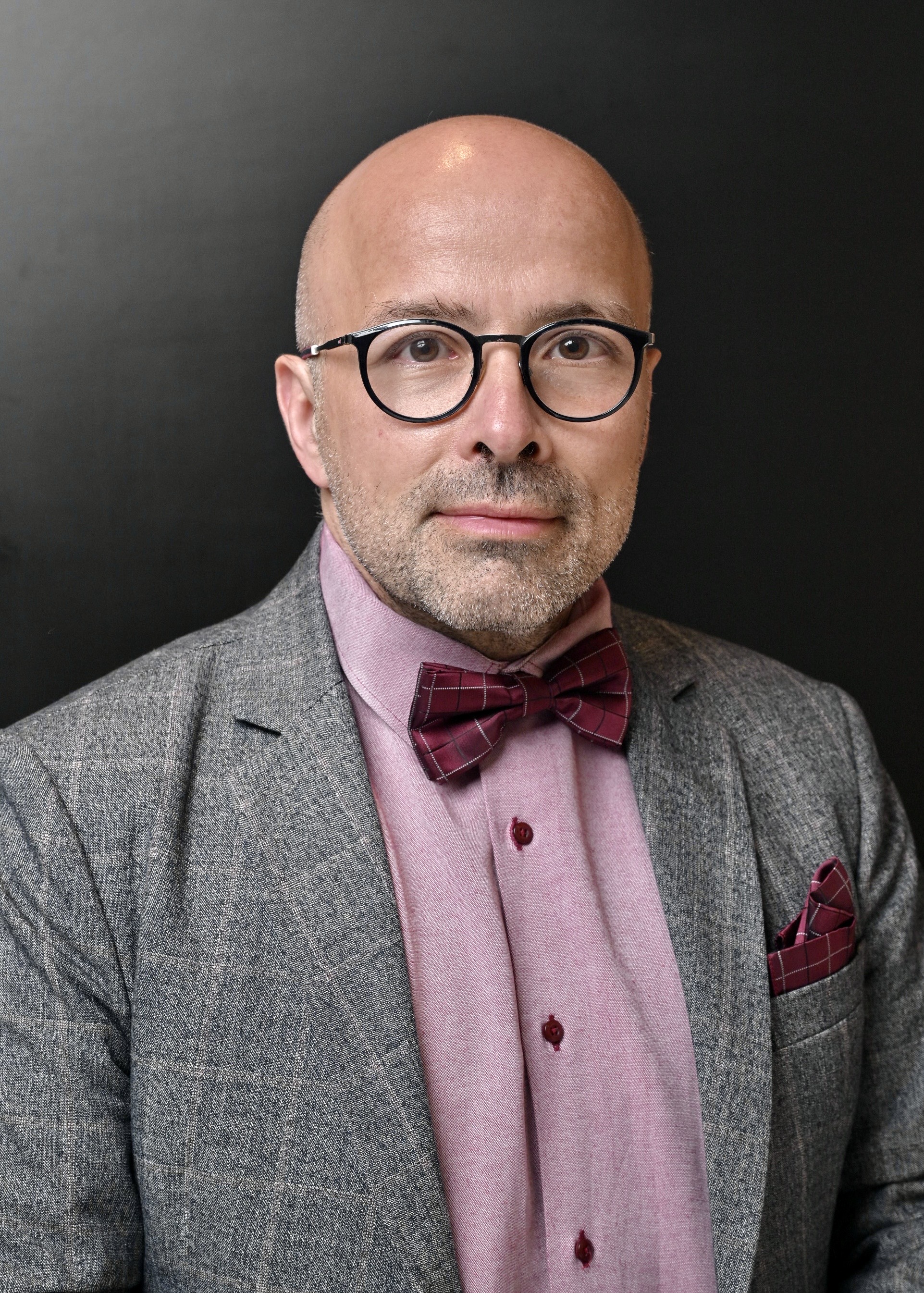
Professor Péter Hegyi, MD, PhD, DSc, MAE, is Director of the Centre for Translational Medicine at Semmelweis University, Chair of the Basic and Clinical Translational Sciences Section of Academia Europaea, and recipient of the prestigious 2025 Robert F. Pitts Award. His scientific work has been cited more than 31,500 times, with an H-index of 84. He developed an innovative hybrid clinician-scientist training model that integrates clinical practice with PhD education, enabling healthcare professionals to translate scientific discoveries into improved patient care. The programme has become one of Europe's largest translational medicine initiatives, training hundreds of PhD students from more than 34 countries and serving as a model for modern healthcare education. At Semmelweis University, this approach has significantly strengthened dental research. Within just 4.5 years, the Faculty of Dentistry doubled both its number of PhD students and its scientific output, making it one of the most research-active dental faculties in Europe. Professor Hegyi's work demonstrates how modern translational medicine education can transform not only individual careers but also the scientific performance and international competitiveness of an entire faculty

Mohammed Al-Haroni

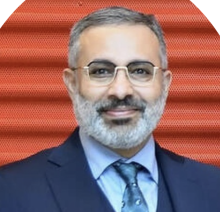
Professor Mohammed Al-Haroni obtained his dental degree from the University of Science and Technology in Yemen and was later authorized to practice dentistry in Norway. From 2004 to 2007, he served as a doctoral research fellow at the Faculty of Dentistry, University of Bergen, Norway. Since 2005, he has held a range of research and academic positions in Norway (University of Bergen and University of Tromsø) and the United Kingdom (University of Aberdeen and UCL Eastman Dental Institute). In 2014, he earned a postgraduate qualification in academic education, which led to his recognition as a Fellow of the Higher Education Academy (FHEA). In the same year, he was appointed Associate Professor in Dentistry at the University of Tromsø. In 2020, Professor Al-Haroni became Head of the Department of Clinical Dentistry, where he is responsible for overseeing the implementation of intended learning outcomes for two undergraduate programmes (Professional Master in Dentistry and Dental Hygiene) and four postgraduate programmes (Orthodontics, Paediatric Dentistry, Special Care Dentistry, and Oral Surgery). He has extensive experience in preclinical and clinical teaching, dental research, and academic administration. Professor Al-Haroni collaborates closely with the Association for Dental Education in Europe (ADEE) to advance dental education across Europe and has recently been appointed as a co-opted member of the ADEE Executive Committee.