Association for Dental Education in Europe

Learning together to improve oral health and quality of life

Performance Assessment of Clinical Skills (PACS): OSCE Tips and Tricks – Setting up an OSCE – Scrutiny and Standard Setting

Wednesday, 26th August 2026 - 14:00 to 15:30
Add to Calendar
Timezone: 

UTC +1

Duration: 

90 Minute

Venue: 

EOK: György Hevesy Lecture Hal

Session type: 
Type 2: Organised, planned and delivered by a subgroup, special interest group, community of practice of ADEE
COP
Session synopsis: 

This Community of Practice (COP) session will explore challenges associated with Performance Assessment of Clinical Skills (PACS) in dentistry. The session will build on our 2025 session which identified a need for practical training around running an OSCE. 

During the in-person workshop, a short two-part training session will be delivered.  The first part will focus on writing and subsequent scrutiny of OSCE stations.  This will focus on developing valid and reliable stations, with clear and transparent instructions for candidates, role-players and examiners.  The second part will focus on standard setting OSCE stations using the Angoff method to establish a baseline for the passing threshold.  Participants will be invited to participate in small group exercises in scrutiny and standard setting of existing OSCE stations, sharing skills and experience to build on expertise.  We anticipate workshop participation to encourage collaborative partnerships and training initiatives, forming the foundation for future COP activities. 

Programme: 

Approximate Duration (minutes)

Topic

Detail

0 – 5

Introduction

Introduce the team, outline aims and objectives

20 min

Introduction to station development and scrutiny

Broad overview of station development / scrutiny

Practical tips and tricks for establishing effective instructions for candidates / role-players / examiners

20 min

Workshop – station development and scrutiny

Members discuss / scrutinise an existing OSCE station to establish the importance of / effective methods to scrutinise and improve stations.

Effective

20 mins

Introduction to marking schemes, standard setting of OSCE stations, including the Angoff method

Broad overview of checklist marking / tips and tricks around effective checklists.

Using Angoff method to standard set checklist marking station

20 mins

Workshop – standard setting tips and tricks

Practical exercise in small groups standard setting the station scrutinised in the first workshop

5 minutes

Session close

Summary, thanks, and next steps
Chair: 

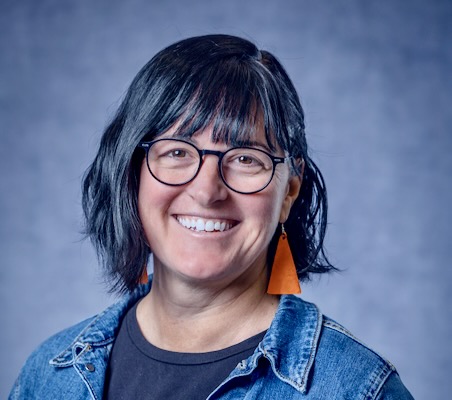
Charlotte Emmanuel

Senior Clinical Lecturer/Honorary Consultant in Oral Surgery. Director of Assessment and Feedback
Cardiff University, UK

Charlotte Emanuel began her career in dental education in 2004, delivering both clinical and didactic teaching in oral surgery. A recognized specialist in oral surgery, she is deeply committed to advancing student learning through chairside instruction and case-based discussions. She has developed innovative teaching aids for exodontia and designed an ex-vivo surgical dentistry course to enhance student confidence in a simulated environment prior to patient care. Charlotte has contributed to curriculum development at Cardiff University, aligning programs with the latest General Dental Council standards. Her work with the Association of British Academic Oral Surgeons includes publishing research on national oral surgery education. Passionate about improving teaching practices, she continually seeks opportunities to support student learning and inspire the next generation of oral surgeons through collaboration and innovation

Clare McNally

University of Melbourne, Australia
Academic Lead for Assessment and Evaluation.

Clare is responsible for the assessment reform project in the MDS curriculum redesign. By developing a programmatic approach to assessment and introducing an entrustable professional activity framework for final year students, Clare is hoping to position the Melbourne Dental School (MDS) is a global leader in dental education and assessment. Clare's PhD at the University of Adelaide explored the relationship between oral health and systemic health in hospitalised older people. In addition to her academic role, Clare is the senior dental hygienist in the Oral Medicine Department at the Royal Dental Hospital of Melbourne helping patients with significant mucosal diseases prevent common dental conditions.

Speakers: 

Sarah Rolland

Senior Lecturer / Honorary Consultant in Orthodontics. Director of Assessment.
Newcastle University, UK

Sarah Rolland has worked in dental education for over 20 years, during which time she has fostered an interest in dental assessment and held the position of Director of Assessment at Newcastle Dental School (UK) for the last 6 years.  Sarah has developed and run the year 3 dental student OSCE examination, updating standard setting methods and moving to a system of sequential testing. She has been involved in the development of a new final year MOSLER examination (Multiple Observed Structured Long Examination Record), a practical assessment method that is used in medicine, but has not been widely used in dental education. Hugely enthusiastic for dental assessment, with a passion for ensuring assessments are valid, reliable and authentic Sarah enjoys working with others and looks forward to developing collaborative learning around the important and evolving area of practical assessments in dental education.

Learning Outcomes: 

During the session, delegates will:

Understand and describe the challenges related to OSCE station development and scrutiny

Explain and execute a simple method of OSCE standard setting using the Angoff method

Develop practical skills in OSCE station scrutiny and standard setting